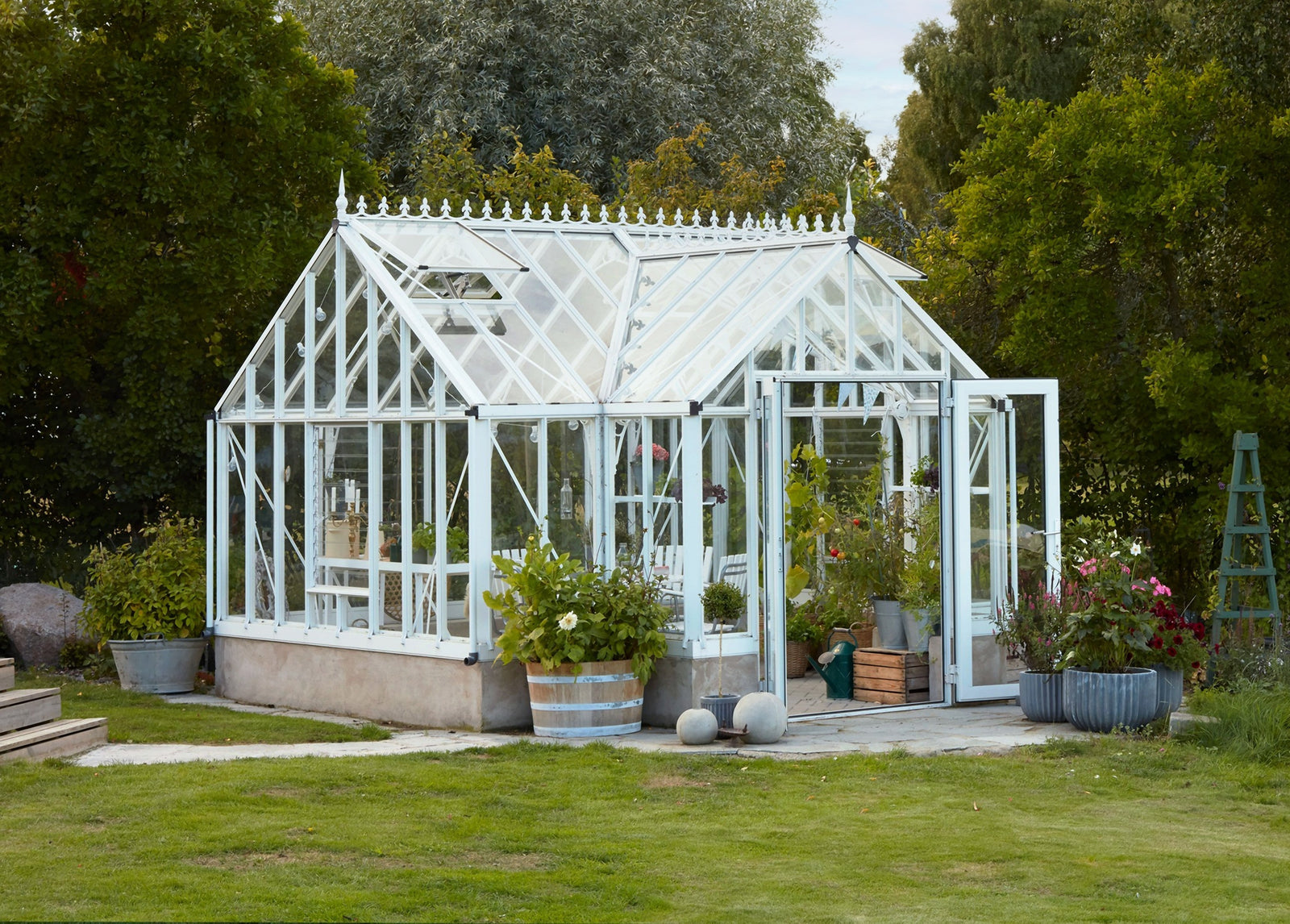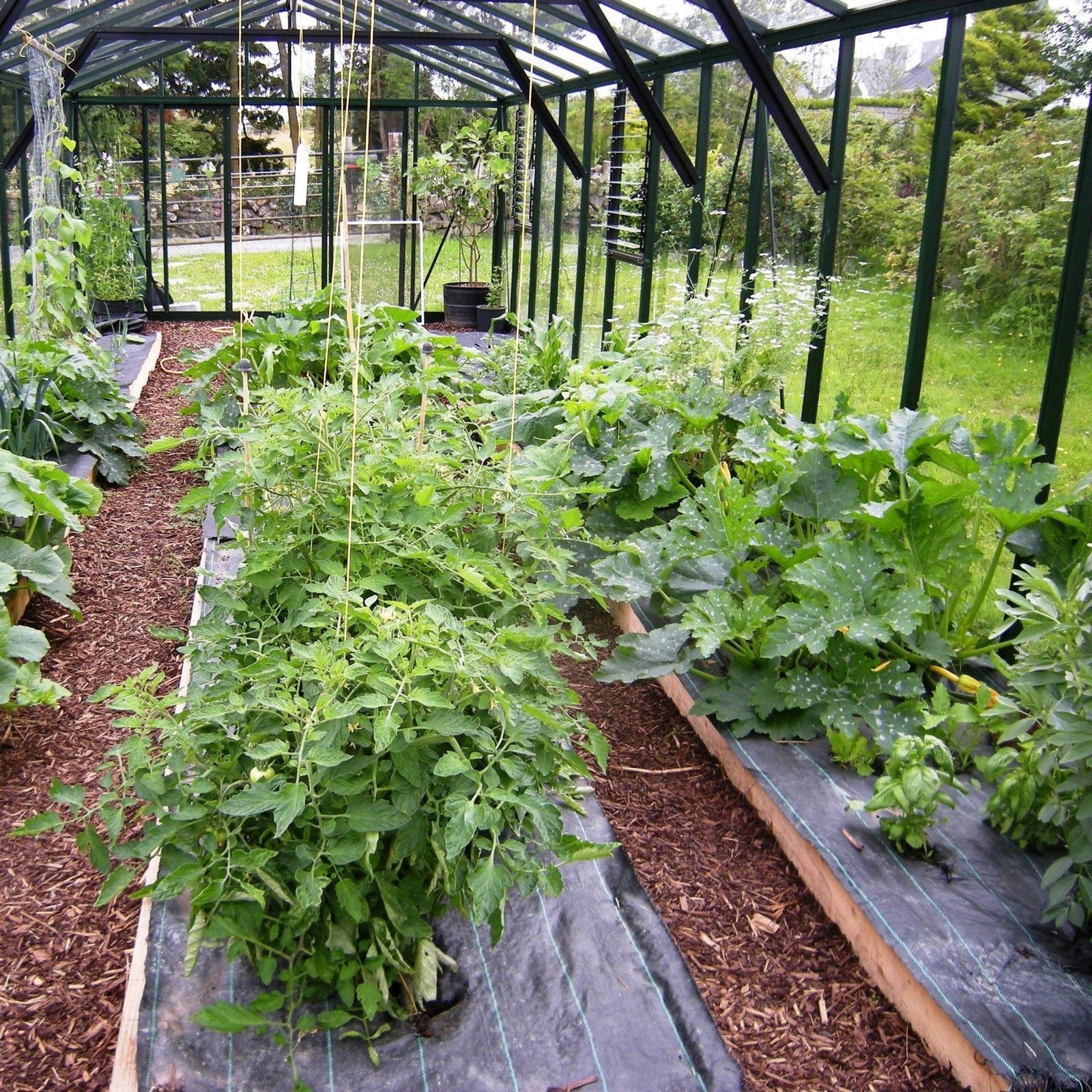

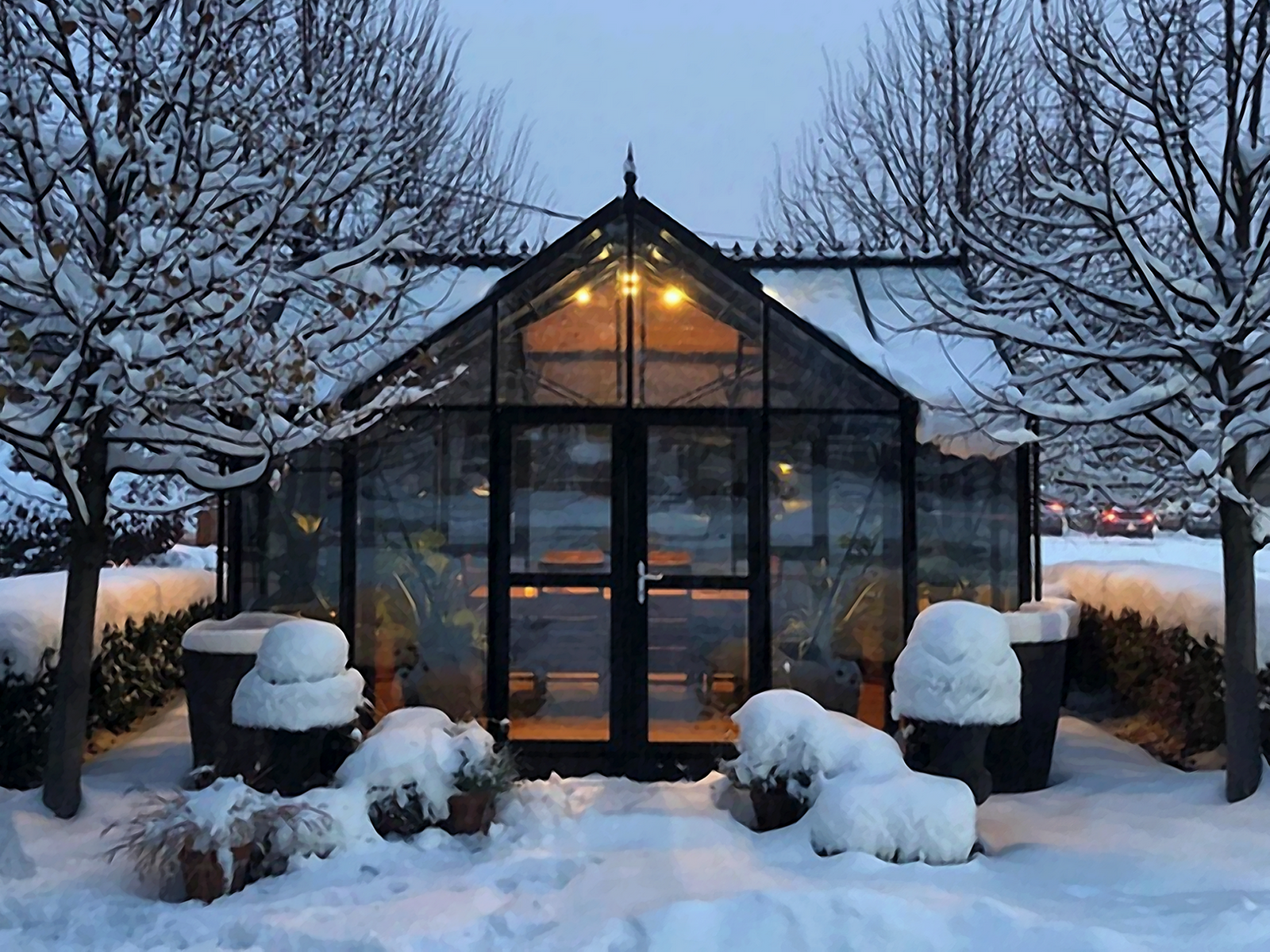

Irish winters have grown increasingly unpredictable, bringing sudden storms, heavy rainfall, cold snaps, and periodic snowfall. A strong well-maintained glasshouse remains one of the most reliable structures for protecting plants year-round — but only if it is properly prepared for winter.
This guide covers the essential steps every glasshouse owner should take to keep their structure safe, functional, and protected in high winds, snow, and freezing conditions.
1. Disarm Your Automatic Vent Openers Before a Storm
Our glasshouses come with the option of automatic vent openers that expand and contract depending on temperature causing the roof vent to automatically open and close.
Why they must be disarmed
While our Megavent Storm automatic openers are protected against strong winds it is recommended by the manufacturer to disable the unit during the winter to avoid undue stress and strain at a time of year when the units are not actually needed.
How to disarm them
- Remove the activating pin at the end of the rod.
- This completely disables the opener’s mechanism.
- Tie the upper and lower arms together using a cable tie or strong string.
- This prevents the vent from lifting during the storm.
Important: You remove the pin first so that, when good weather returns, the opener isn’t fighting against a tied vent.
2. Manage Snow Accumulation to Protect Roof Integrity
Heavy, wet snow is one of the most dangerous weather loadings for any glasshouse.
Why snow is hazardous
A glasshouse roof is engineered for a specific weight capacity. Snow:
- Adds substantial weight, increasing the risk of collapse
- Creates uneven loading
- Reduces the structure’s ability to withstand wind after the snowfall
- Causes stress fractures, particularly on older or weakened frames
Recommended action
You should remove accumulated snow as soon as possible.
Safe snow removal
- Use a soft brush or telescopic sweeping tool
- Avoid knocking or hitting the glass
Clearing snow early not only protects your glasshouse — it also ensures the roof remains strong enough for the next storm.
3. Clean Gutters and Downpipes After Autumn
Autumn leaves and debris clog gutters quickly. When this happens, heavy rainfall or melting snow has nowhere to go.
What blocked gutters cause
- Overflowing water running into the greenhouse
- Refreezing water that can expand and crack components
Cleaning the gutters isn’t about preventing freezing — it’s about preventing overflow. Clearing them once autumn has passed is ideal.
4. Keep Doors and Windows Secured in Stormy Weather
Even partially open access points can act like sails in a storm.
Before any orange or red weather warning:
- Fully close all doors
- Fully close all roof and side vents
- Double-check locks, latches, and catches
- Confirm that automatic openers are disarmed
A tightly closed glasshouse substantially reduces wind load.
5. Protect Delicate Plants From Frost Damage
Even in an unheated glasshouse, the temperature will often sit a few degrees above outdoor readings. However, sensitive plants still require protection.
Best winter plant protection strategy
- Thermal covers (such as frost protection fleece which we can supply) can be placed over frost sensitive plants
- Use a thermostatically controlled Greenhouse Heater to maintain a regular, constant temperature. We offer Bio Green heaters designed specifically for glasshouses and polytunnels. Our electric heaters have a very accurate thermostat which makes them more economic to run than less accurate types. Propane Gas Heaters are also available which are useful where you don’t have an electric supply but are not suitable for some sensitive species of flowers.
- Do not attempt to heat the entire structure — the goal is simply to prevent freezing. You can section off an area within your Greenhouse to have as a heated zone.
This method is particularly suitable for plants like orchids which require maintaining much higher temperatures than merely frost protection, when heating to this degree it is necessary to have the area well insulated also (bubble polythene, twin wall polycarbonate etc.) to reduce heating costs. An indirect form of heating (meaning something like a central heating system using warm pipes to distribute heat rather than a naked flame) is best when heating to high temperatures as there is the potential to create a toxic environment when heating to high levels with a naked flame.
Final Thoughts
A glasshouse is an exceptional asset during the colder months — provided it is prepared. Disarming vent openers, preventing snow accumulation, keeping gutters clear, securing doors, and protecting delicate crops are straightforward tasks that drastically reduce risk.
By addressing winter preparation early, you ensure your glasshouse remains safe, functional, and ready to support healthy plant growth all year long.